Think of a traditional
Swan Lake and then magnify the spectacle. English National Ballet’s in-the-round version has 60 swans gliding across the stage together – a traditional production might have only 20.
For the busy wardrobe department, this makes a lot of work, and is one of the elements of staging
Swan Lake which has to be thought out months in advance. The Principal dances a dual role – Odette and Odile, which means that two very different tutus (one white, one black) have to be made to convey to you the dramatic character change. On top of this, for ENB’s in-the-round production, vast numbers of swan tutus have to be made (costing from £800 each) and for this the company outsources some of the work. It can take 6 weeks to make 50 tutus and they don’t last long.
tutu
ballet skirt, from Fr. tutu, alteration of cucu, infantile reduplication of cul "bottom, backside."
Online Etymology Dictionary, © 2010 Douglas Harper
It’s also true that if you said ‘
tutu’ in Hawaii, you’d be talking about your Grandmother; in New Zealand it’s a poisonous plant and Tutu de Feijão is a paste made of beans and manioc flour in Brazil!
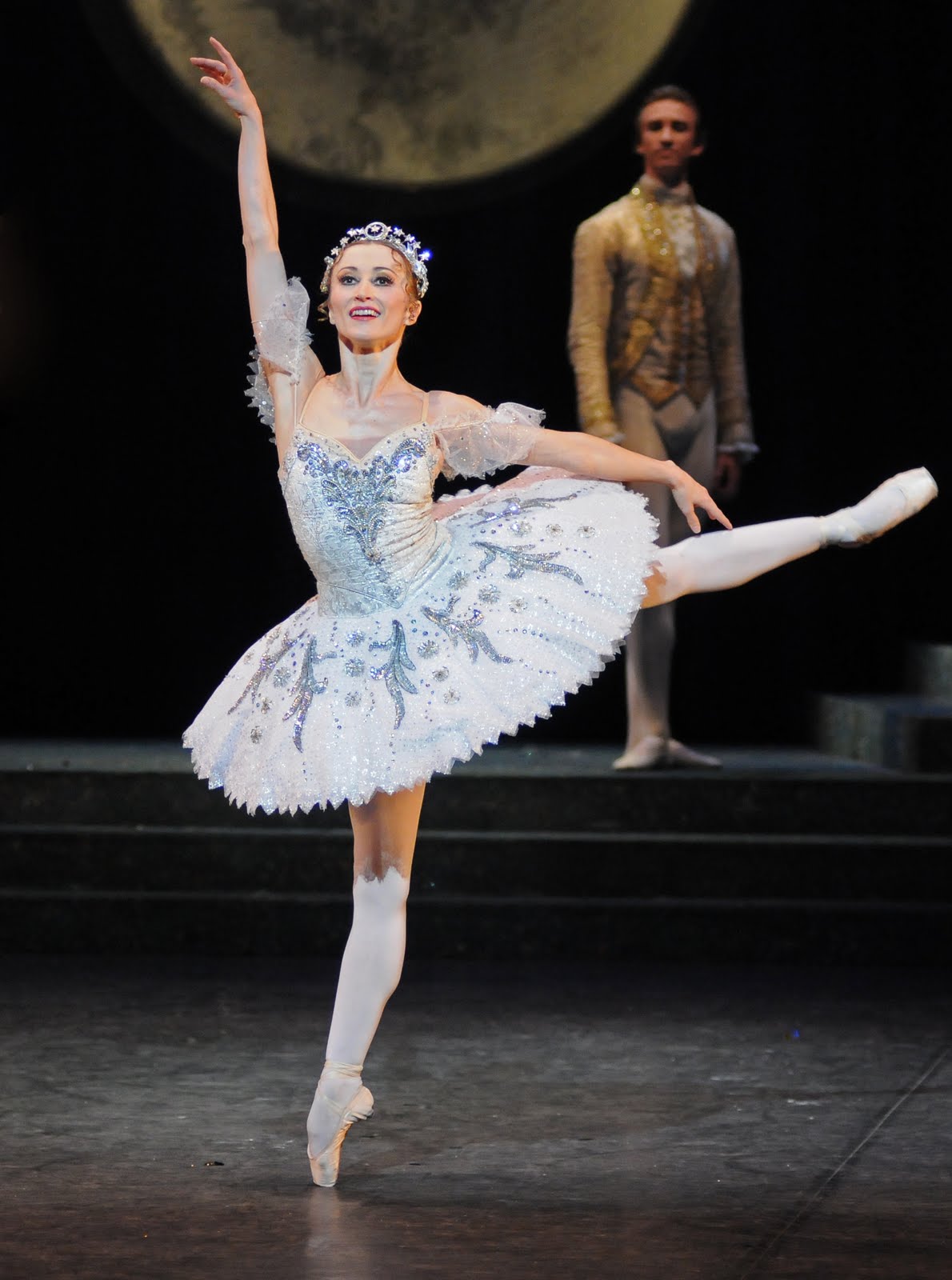
A tutu is really a couture dress made for a ballerina. The Principal dancers will have bespoke tutus, sometimes having input into the shape and fit, while others will be fitted into existing handmade tutus - possible because of the clever way a tutu is made, with several rows of hooks and bars (which have to be chromed to prevent rusting). They are expensive – Odette’s tutu at ENB will cost upwards of £1000. Odile's tutu, which is more intricate and has more jewellery and fewer feathers, will cost even more.

Most people think of a tutu as the whole dress, but strictly speaking it is just the net layers around the waist – the bodice is separate and both are made by specialists. A tutu begins life as 10 metres of net, in strips of varying stiffness. The softest layers will be placed close to the legs, the very stiff layers will go in the middle and the top layer will be somewhere between the two. It is based on a basque which fits the waist and hips, and knickers are attached in the final stages. The net layers have to be tied down, by hand, with loose stitching to ensure they all move together.
Around the world, the number of layers requested varies between companies. A tutu is usually made with 10-12 net layers; in Italy it is between 7-10 and Paris is always 13. A crinoline (steel) wire is used to make a firm hoop in one of the layers, which helps to retain the plate-like shape. The final layer, the top skirt, is the heaviest, with jewels and feathers, appliqué, embellishments and in the case of ENB’s
Swan Lake, a lace with a feather pattern (of which more later).
"For the most part I prefer to wear romantic tutus (a long, full style of tutu that usually goes down to the middle of one's calf) over classical tutus, but it would depend on what I am dancing of course. I also love the way a very tight bodice feels and looks, especially when it creates a tiny waistline! I put on my first tutu when I was very young, I believe I was around nine years old, and I remember thinking how different and strange it felt. Now when I put on a tutu I don't feel much of a difference for the most part, although every tutu is different."
Madison Keesler, Corp, San Francisco Ballet
Madison Keesler, taken as Aurora in Central Pennsylvania Youth Ballet's full production of The Sleeping Beauty
Photograph : Rosalie O'Connor
You might be surprised to know that tutus are made almost exclusively by men, and that’s because it is hard, physical work. It’s also very repetitive. In this year of biodiversity, it seems appropriate to say that tutu makers are a critically endangered species. You can probably count on the fingers of one hand, how many makers are currently working in the UK, and you’d have fingers to spare.
Final adjustments backstage at the Royal Albert Hall
Once the tutu has been made, two fittings usually take place. The crucial measurements – the height of a dancer and the length of the back from neck to waist – can vary a great deal even in one ballet company. By this time the bodice, a grosgrain fabric backed onto a cotton drill, will have been fitted to the net layers, and it will be pinned, stitched, undone and re-stitched several times until it fits like a glove.
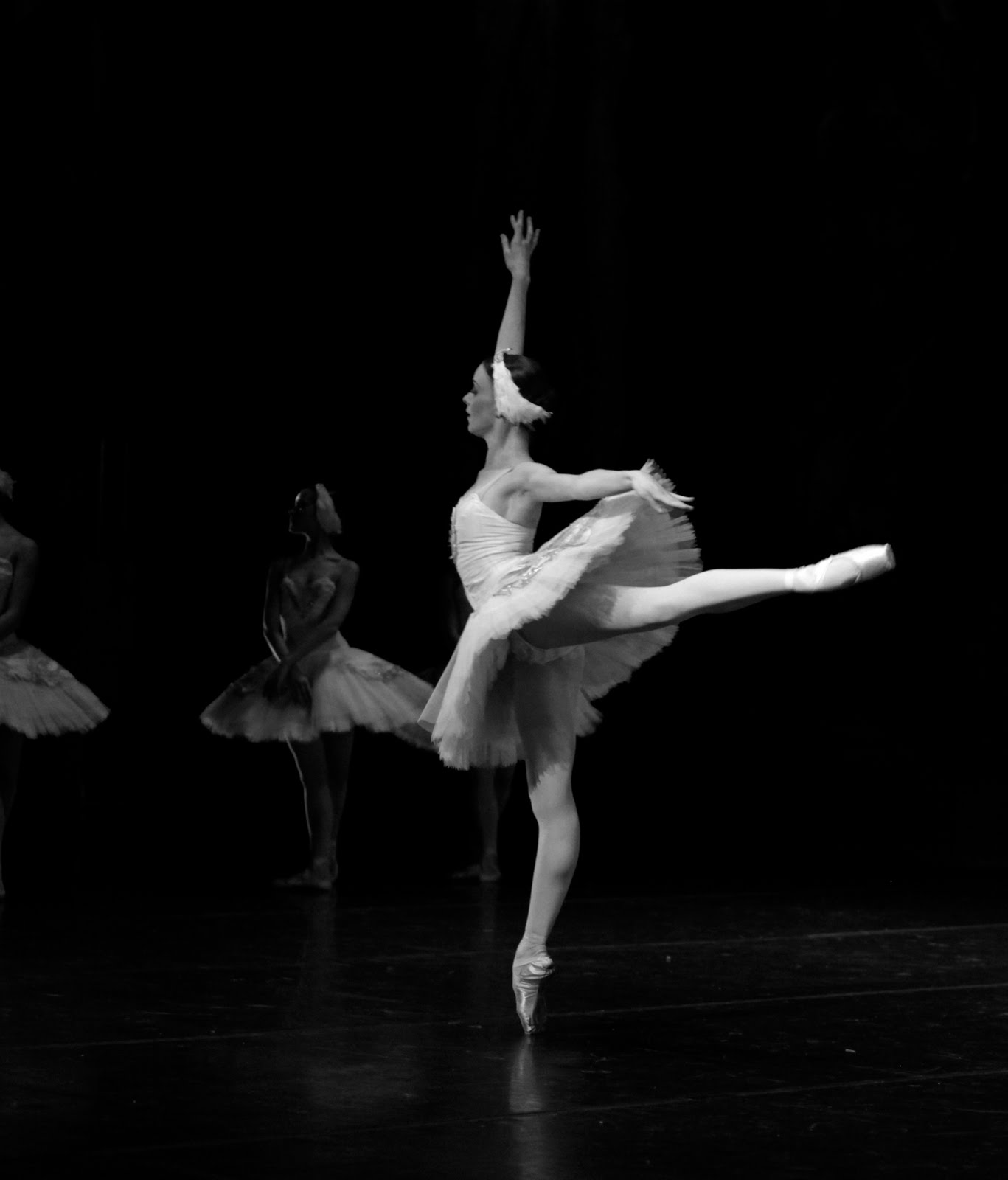
“There are always the complications that come with things like partnering and certain movements, especially when the tutus are new. They tend to sometimes restrict movements like lifting your legs -especially to arabesque - and depending on how heavy the material, can sometimes affect where your balance is. From personal experience it’s much better to get as much practice wearing them before using them on stage. Despite all of that though, they really are the perfect thing to put on to make you feel like a true ballerina.”
Tracy Jones, Corp, Corella Ballet
Tracy Jones dancing 'Big Swans' in Swan Lake with Corella Ballet
photograph : Fernando Bufala
Back to the lace fabric I mentioned earlier. For ENB’s last staging of
Swan Lake in-the-round in 2007, the Wardrobe department sourced a lace fabric made in a feather shaped pattern, which was bonded onto a silver lame fabric, giving a shadow and a shine. This was appliquéd onto the top skirt of the tutu along with Coque feathers (from the tail of a White cockerel for Odette) giving an overall effect of sparkling feathers.

The Company had bought & used all of the lace available in 2007. However, when preparing for this staging they discovered that the lace could not be sourced from anywhere. In the intervening years and unbeknown to them, the manufacturers had gone bust and all the machines in India had been smashed. What that means for this year is that all of the lace from the old costumes has had to be painstakingly unpicked and then sewn onto the new tutus. This work has been outsourced and is difficult because it’s not always possible to wash tutus between performances (because of their intricate design) and the dancers often spray their legs and feet with hairspray which gets onto the fabric, making it sticky and hard to separate.
"Tutus can be the enemy of a male dancer. They cut the ballerina in half so they block your view from the waist down. Because of this issue we practice any sort of pas de deux that requires a tutu in the studio with a practice tutu. So this way the male dancer can feel the ballerinas balance and weight. What I like about tutus is that they are the "classic and essential element" of any classical ballet just like a pointe shoe, without it ballet would not have the same beauty and elegance!"
Sabi Varga, Soloist, Boston Ballet
Odile’s black tutu is decorated largely with jewels that sparkle under the stage lights, but, this being Swan Lake, she will also have some special feathers. These are also tail feathers, this time from a Bronze cockerel, which are over-dyed black on the underside and are particularly prized for the topside which has a green, iridescent sheen that ENB call ‘oil-slick’ because it perfectly describes the effect. It is something that cannot be reproduced by dyeing.
Cockerels produce around 15 long, flat feathers per tail, and they are easy to produce in large numbers. The feathers can be cut to any length, making them very versatile. There are three types of Cockerel producing different coloured feathers – White, Bronze and Chinchilla.
English National Ballet's Swan Lake tutu'd dancers
Swan feathers are never used, partly because they are too large (the tutu is decorative not indicative), but also because Swans are protected in the UK under the Wildlife and Countryside Act 1981 which makes it illegal to take the wild birds, the nests or their eggs. Unmarked swans in England traditionally belong to the Monarch, but there are some on the Thames that belong to the Guild of Vintners and the Guild of Dyers. The famous Abbotsbury Swannery provides feathers to The Plumery and these come from moultings.
During the Bird Flu outbreak which began in 2003 in South East Asia, the supply of feathers was threatened. Most of the feathers coming into the UK are imported from China, South Africa, Poland, Turkey and Israel – largely countries were a lot of chicken is consumed as the feathers are a by-product. No feathers could be imported from affected regions (though neighbouring non-affected regions were fine), and strict conditions were imposed. Vet and sterilization certificates would be checked with the feathers and if any failed to meet the stringent criteria they were destroyed.
English National Ballet Swan Lake tutu
"I absolutely love dancing in a tutu - it is the quintessential ballerina costume! My favorite tutu I have ever worn would have to be any of the three Aurora tutus from the Sleeping Beauty. Here's a tip - if you are going to be performing in a tutu, try and rehearse in a practice one. It makes such a difference not only in the way you hold yourself but also for your partner. A tutu adds difficulty to partnering, so the guys are always happy when we are able to wear one in rehearsals. Think about it - a shoulder sit is a lot different with 8 layers of tulle!"
Kathryn Morgan, Soloist, New York City Ballet
Some dancers love tutus, and some find them uncomfortable and restrictive. Not being able to see your legs and feet takes some getting used to, and in a ballet such as
Swan Lake, where the ballerina is very much “on her legs”, she relies more on her partner for balance. For her partner too, the tutu presents challenges. Most of the decoration will be placed on the top skirt but avoids the waistline, giving her partner a safe place to hold her so that his hands are not torn to shreds. He still has to watch out for his face though, as the stiff net layers can scratch the skin.
That said, there is nothing like a tutu to make a dancer feel like a ballerina. Along with pointe shoes, a tutu really is the unique tool of her trade.
“I like tutus, if they are well made and fit the girl properly. I like the way the bodice feels in my hand. Though that being said bodices with beading etc. can sometimes cut you up a bit! There is a feeling of security for some reason, probably because a tutu doesn't (or shouldn't) move around when you are partnering. The costume is exactly where your partner is. In the beginning though I had a little trouble with overhead lifts, not because they were physically more difficult with a tutu, but because you have to be very aware of the angle of the costume from the front of house. After a few shows though, I reworked my hand positions a bit, so my ballerina would not be caught in a position that could be described as untowards!”
Tyler Angle, Principal, New York City Ballet
English National Ballet has generously offered a unique prize to celebrate their 60th Birthday Year and the 60 Swans in Swan Lake.
To begin with, I have 2 tickets to
Swan Lake in-the-round at the Royal Albert Hall this month. Then, at the beginning of the new season in late August, you will be invited to spend an afternoon at ENB headquarters in London, visiting the wardrobe department, watching a rehearsal and meeting some of the dancers. Finally (subject to availability) a professional photographer will document your visit to ENB as a memento for you to keep, and your visit will be featured here in BALLET NEWS.
To be in with a chance of winning this fabulous & unique opportunity, all you need to do is correctly answer the following question :
What date does English National Ballet celebrate its 60th Birthday ?
Please leave your answer in the comment form below along with your contact details.
The closing date is Friday 11th June 2010 at 5pm GMT. The winner will be chosen at random from the correct answers after the closing date and notified immediately.
You must make your own travel arrangements and this prize does not cover any expenses incurred.
Please note that the 2 tickets are available for one of the following performances/casts (subject to availability), so please make sure that you are available at short notice :
Sunday 13 June at 2.30pm
Elena Glurdjidze, Arionel Vargas, Tamas Solymosi
Tuesday 15 June at 7.30pm
Polina Semionova, Vadim Muntagirov, Tamas Solymosi
Wednesday 16 June at 7.30pm
Elena Glurdjidze, Arionel Vargas, Tamas Solymosi
Wednesday 16 June at 1.50pm (Schools' Matinee, not open to the public)
Begona Cao, Esteban Berlanga, Tamas Solymosi
Thursday 17 June at 7.30pm
Daria Klimentová, Vadim Muntagirov, Tamas Solymosi
Friday 18 June at 7.30pm
Elena Glurdjidze, Arionel Vargas, Tamas Solymosi
Saturday 19 June at 2.30pm
Erina Takahashi, Dmitri Gruzdyev, Tamas Solymosi
Saturday 19 June at 7.30pm
Daria Klimentová, Vadim Muntagirov, Tamas Solymosi
Here is a video of
Swan Lake.
This is a
video clip of Polina Semionova, who Guests in Swan Lake, dancing with Vadim Muntagirov. Toegther they will open the run of performances on June 9th. To book tickets, please contact the Royal Albert Hall
Box Office.
Good Luck everyone !










.jpg)

.JPG)



.jpg)


.jpg)






 Posts
Posts


