Showing posts with label Royal Albert Hall. Show all posts

Thursday, 10 June 2010

Swan Lake, English National Ballet, reviewed

Swan Lake
English National Ballet
Royal Albert Hall
9th June 2010

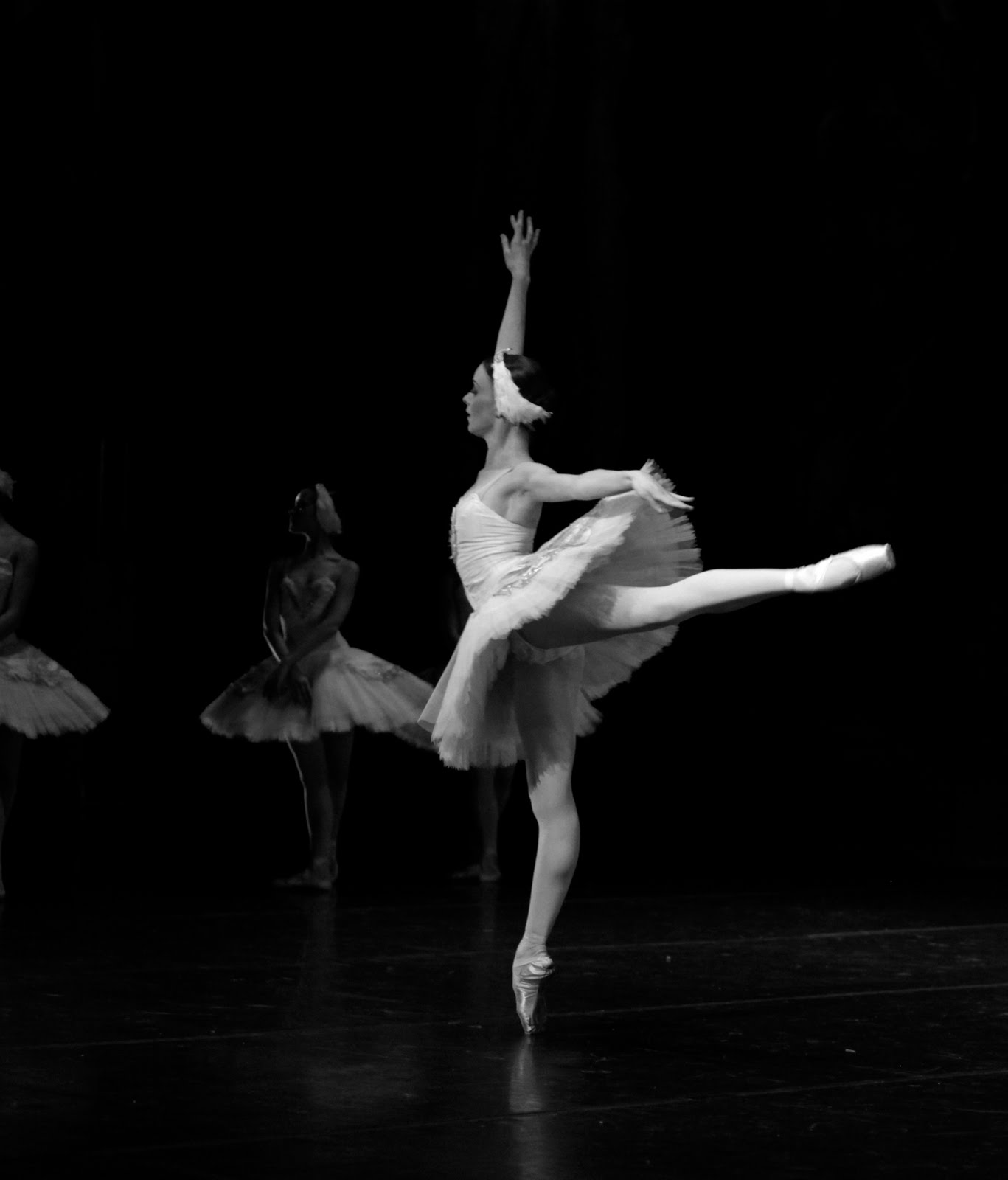
60 Swans
Photograph :  Patrick Baldwin

English National Ballet’s in-the-round presentation of the classic Swan Lake story has been made for the vastness of the Hall’s stage. It’s an unforgiving and exposing place – you need to be really on your game to do well here. Vadim Muntagirov, our Prince for the night, is 20 and only a year out of school. In that time he has skipped 8 years in the corp de ballet (Carlos Acosta did the same and was in the audience) and has been given five principal roles. This was his debut as Prince Siegfried.

This production was developed to attract newcomers to ballet. Judging by the audience it probably has – the ushers were endlessly running around, repeatedly asking people to stop taking photographs and using flash – something that wouldn’t usually be necessary. Why is it an issue ? Flash is dangerous for dancers. Imagine if you were spotting a turn (which means picking a spot in the distance and using it as a marker of where you are, as you quickly whip your head around whilst turning) and a flash bulb went off, obliterating your spot – it could result in one of the dancers being injured. Even professional photographers don’t use flash with dancers in rehearsal or performance.

That said, the theatrical spectacle is undeniable. I could do without the jugglers and acrobats, probably even the children too, although it is good that they have stage experience in this way. It’s enough that you have eight Cygnets instead of four, four Lead Swans instead of two and a Pas de Douze instead of a Pas de Trois. The sets are minimal, and with no wings the cast have the tricky job of making some entrances and exits via the auditorium, made all the more hazardous when the dry ice is in full flow and the steps are hard to see, especially when exiting at speed as Muntagirov often had to. In particular, the trees at the moonlit lakeside are ravishingly atmospheric, with lighting by Howard Harrison.

Photograph :  Patrick Baldwin

Thinking about the audience is always a winner, and all of the steps have been thought out, to look good from every angle so that wherever you are sitting, you will get some great views (and inevitably some less great ones). However, this is at the expense of some of the mime ; this story is told through bold groupings and dazzling (literally) lighting. If you are susceptible to flashing lights, be warned.

Daria Klimentová was given the First Night honours as Guest dancer Polina Semionova had Visa problems and was unable to travel. I’ve said before that Klimentová is nobody's substitute. Tiny, yet made of solid steel, she pulls Muntagirov into the story and that’s just what he needs at this stage in his career. In rehearsals they laugh together all the time – here the tension crackles in the air as the drama of the story unfolds.

Daria Klimentová and Vadim Muntagirov
Photograph : Annabel Moeller

Muntagirov has the manner of a Prince, with precise, clean lines and pointed feet. His strong, highly arched feet power him through arabesque and beyond.  He has the ability to hang in the air, leaving behind a beautiful arabesque line. It’s tough on the Prince that he has to spend time on stage walking or sitting, unable to warm up before his first adagio solo. It’s harder still to control your breath sufficiently to see you through those controlled steps when you are nervous.

But here is the reason to see him right now – this very week : because he has humility, a way of expressing emotions without artifice that you don’t very often see in more experienced performers who have learnt not to.

I could have cried when I saw him softly drop to his knees and bow his head in front of Klimentová, as he acknowledged his betrayal of her Odette; every sinew in him felt that emotion and I felt it too – and I’ve seen him do it a few times. His first solo is the same, full of longing, despair and insecurity.

There is something about Muntagirov's speed in the air that reminds me of a conversation I had with one of the Concorde pilots.  He told me that flying at mach 2, twice the speed of sound, we were moving faster than a bullet from a gun.  You can't see a bullet, but you can see Concorde because it's bigger.  Same with Muntagirov.

I would like him to relax a little more; be a bit softer. Through his schooling he has the considerable advantage of having mastered the Russian and English styles, but it’s his Russian training, with its precise placing and a slightly formal stiffness, which is uppermost when he is nervous. I could see it in his ankles, and the way he moved his feet when standing.  Once or twice I saw a clenched fist with his left hand; something I can’t imagine in a Prince. The stiffness will go, and right now it’s endearing to see him working things through.

Daria Klimentová and Vadim Muntagirov
Photograph : Annabel Moeller

This is the only Swan Lake where you will see a flock of 60 swans on stage together. And it’s some sight. A point about the noise – it’s not that the dancers haven’t taken care with their pointe shoes – they have – it’s the floor, and there is nothing that can be done about it. The swans also have a lot of ground to cover and at times they fairly race on, and yes, you can hear them. But don’t let this put you off ballet. Appreciate instead the skill of standing in perfectly straight drills, on pointe, of always having your head directly behind the girl in front, and of the particular challenges of the lead swan in each row, who has to hit the right spot every time. All of the swans must use their elbows and have very soft arms, whilst at the same time their feet must be pin sharp. If you can picture gently wafting anemones wearing a tutu, multiplied a million times, that is your beautiful picture framed.

ENB’s company dancers have been augmented with 38 extra dancers for this production, who have been brought up to company standard in just three weeks by the excellent artistic staff, including Rosalyn Whitten, Jane Haworth (also performing as The Queen), Maina Gielgud and Stephen Beagley. Derek Deane has given the swans some of the best choreography – and some of the hardest. Time and again they drop to their knees right on the music, lowering to the floor with hands on their feet and never on the floor.

There were other cast changes too. Due to injury, Yat-Sen Chang was unable to perform, giving James Forbat a phenomenal debut in the Neapolitan dance alongside Senri Kou. It’s furiously fast and was taken at a real lick by the conductor Gavin Sutherland. Both dancers gave their all, Forbat really pulling every last inch from his jumps.

I want to mention Esteban Berlanga, whose beautifully shaped feet were wasted in green boots. He spent much of the evening sat on a stool, and yet on Saturday he will dance the Principal role with Begoña Cao. Both have exquisite, perfectly matched lines, and I’d urge you to see them.

Daria Klimentová and Vadim Muntagirov
Photograph : Annabel Moeller

I didn’t see anyone jump higher, or land more silently, than Muntagirov. By Act 111 Klimentová and Muntagirov show you why they opened the show. Klimentová flashes her eyes, busy with deceit, while Muntagirov falls helplessly under her spell. All of the tricks are there – the 32 fouetté rond de jambe en tournant from Klimentová and some stunning turns from Muntagirov, displaying his long limbs to perfection. On the ground he is tall and strong; in the air he seems to float and looks as light as a feather.  Rothbart, half-man, half-bird, danced very well by Tamás Solymosi, really came into his own in the last two acts, finally meeting his watery end in Act 1V.

The ending falls flat after the tempestuous demise of Rothbart, and its ambiguity doesn’t sit well – is it a happy ending or just a pause in the story ? It’s not emphatic enough. Left alone on the stage, Odette and Prince Siegfried turn slowly, wrapped up with each other. I can’t understand why Rothbart gets a call-back and yet the backbone of the tale – the swans – scatter from the stage never to be seen again.  They deserve an encore.

Daria Klimentová and Tamás Solymosi
Photograph : Annabel Moeller

Esteban Berlanga and Begoña Cao will dance the principal roles for one performance only, on Saturday 12 June at 2.30pm

Swan Lake is in rep at the Royal Albert Hall until June 19th
Box Office : 0845 401 5045

Wednesday, 2 June 2010

The story of a Swan Lake tutu (& you can win Swan Lake tickets plus an afternoon with English National Ballet’s dancers)


Think of a traditional Swan Lake and then magnify the spectacle. English National Ballet’s in-the-round version has 60 swans gliding across the stage together – a traditional production might have only 20.

For the busy wardrobe department, this makes a lot of work, and is one of the elements of staging Swan Lake which has to be thought out months in advance. The Principal dances a dual role – Odette and Odile, which means that two very different tutus (one white, one black) have to be made to convey to you the dramatic character change. On top of this, for ENB’s in-the-round production, vast numbers of swan tutus have to be made (costing from £800 each) and for this the company outsources some of the work. It can take 6 weeks to make 50 tutus and they don’t last long.


tutu
ballet skirt, from Fr. tutu, alteration of cucu, infantile reduplication of cul "bottom, backside."
Online Etymology Dictionary, © 2010 Douglas Harper

It’s also true that if you said ‘tutu’ in Hawaii, you’d be talking about your Grandmother; in New Zealand it’s a poisonous plant and Tutu de Feijão is a paste made of beans and manioc flour in Brazil!

A tutu is really a couture dress made for a ballerina. The Principal dancers will have bespoke tutus, sometimes having input into the shape and fit, while others will be fitted into existing handmade tutus - possible because of the clever way a tutu is made, with several rows of hooks and bars (which have to be chromed to prevent rusting). They are expensive – Odette’s tutu at ENB will cost upwards of £1000. Odile's tutu, which is more intricate and has more jewellery and fewer feathers, will cost even more.


Most people think of a tutu as the whole dress, but strictly speaking it is just the net layers around the waist – the bodice is separate and both are made by specialists. A tutu begins life as 10 metres of net, in strips of varying stiffness. The softest layers will be placed close to the legs, the very stiff layers will go in the middle and the top layer will be somewhere between the two. It is based on a basque which fits the waist and hips, and knickers are attached in the final stages. The net layers have to be tied down, by hand, with loose stitching to ensure they all move together.

Around the world, the number of layers requested varies between companies. A tutu is usually made with 10-12 net layers; in Italy it is between 7-10 and Paris is always 13. A crinoline (steel) wire is used to make a firm hoop in one of the layers, which helps to retain the plate-like shape. The final layer, the top skirt, is the heaviest, with jewels and feathers, appliqué, embellishments and in the case of ENB’s Swan Lake, a lace with a feather pattern (of which more later).

"For the most part I prefer to wear romantic tutus (a long, full style of tutu that usually goes down to the middle of one's calf) over classical tutus, but it would depend on what I am dancing of course. I also love the way a very tight bodice feels and looks, especially when it creates a tiny waistline! I put on my first tutu when I was very young, I believe I was around nine years old, and I remember thinking how different and strange it felt. Now when I put on a tutu I don't feel much of a difference for the most part, although every tutu is different."
Madison Keesler, Corp, San Francisco Ballet

Madison Keesler, taken as Aurora in Central Pennsylvania Youth Ballet's full production of The Sleeping Beauty
Photograph :  Rosalie O'Connor

You might be surprised to know that tutus are made almost exclusively by men, and that’s because it is hard, physical work. It’s also very repetitive. In this year of biodiversity, it seems appropriate to say that tutu makers are a critically endangered species. You can probably count on the fingers of one hand, how many makers are currently working in the UK, and you’d have fingers to spare.

Final adjustments backstage at the Royal Albert Hall

Once the tutu has been made, two fittings usually take place. The crucial measurements – the height of a dancer and the length of the back from neck to waist – can vary a great deal even in one ballet company. By this time the bodice, a grosgrain fabric backed onto a cotton drill, will have been fitted to the net layers, and it will be pinned, stitched, undone and re-stitched several times until it fits like a glove.

“There are always the complications that come with things like partnering and certain movements, especially when the tutus are new. They tend to sometimes restrict movements like lifting your legs -especially to arabesque - and depending on how heavy the material, can sometimes affect where your balance is. From personal experience it’s much better to get as much practice wearing them before using them on stage. Despite all of that though, they really are the perfect thing to put on to make you feel like a true ballerina.”
Tracy Jones, Corp, Corella Ballet

Tracy Jones dancing 'Big Swans' in Swan Lake with Corella Ballet
photograph :  Fernando Bufala

Back to the lace fabric I mentioned earlier. For ENB’s last staging of Swan Lake in-the-round in 2007, the Wardrobe department sourced a lace fabric made in a feather shaped pattern, which was bonded onto a silver lame fabric, giving a shadow and a shine. This was appliquéd onto the top skirt of the tutu along with Coque feathers (from the tail of a White cockerel for Odette) giving an overall effect of sparkling feathers.


The Company had bought & used all of the lace available in 2007. However, when preparing for this staging they discovered that the lace could not be sourced from anywhere. In the intervening years and unbeknown to them, the manufacturers had gone bust and all the machines in India had been smashed. What that means for this year is that all of the lace from the old costumes has had to be painstakingly unpicked and then sewn onto the new tutus. This work has been outsourced and is difficult because it’s not always possible to wash tutus between performances (because of their intricate design) and the dancers often spray their legs and feet with hairspray which gets onto the fabric, making it sticky and hard to separate.

"Tutus can be the enemy of a male dancer. They cut the ballerina in half so they block your view from the waist down.  Because of this issue we practice any sort of pas de deux that requires a tutu in the studio with a practice tutu. So this way the male dancer can feel the ballerinas balance and weight. What I like about tutus is that they are the "classic and essential element" of any classical ballet just like a pointe shoe, without it ballet would not have the same beauty and elegance!"
Sabi Varga, Soloist, Boston Ballet

Odile’s black tutu is decorated largely with jewels that sparkle under the stage lights, but, this being Swan Lake, she will also have some special feathers. These are also tail feathers, this time from a Bronze cockerel, which are over-dyed black on the underside and are particularly prized for the topside which has a green, iridescent sheen that ENB call ‘oil-slick’ because it perfectly describes the effect. It is something that cannot be reproduced by dyeing.

Cockerels produce around 15 long, flat feathers per tail, and they are easy to produce in large numbers. The feathers can be cut to any length, making them very versatile. There are three types of Cockerel producing different coloured feathers – White, Bronze and Chinchilla.

English National Ballet's Swan Lake tutu'd dancers

Swan feathers are never used, partly because they are too large (the tutu is decorative not indicative), but also because Swans are protected in the UK under the Wildlife and Countryside Act 1981 which makes it illegal to take the wild birds, the nests or their eggs. Unmarked swans in England traditionally belong to the Monarch, but there are some on the Thames that belong to the Guild of Vintners and the Guild of Dyers. The famous Abbotsbury Swannery provides feathers to The Plumery and these come from moultings.

During the Bird Flu outbreak which began in 2003 in South East Asia, the supply of feathers was threatened. Most of the feathers coming into the UK are imported from China, South Africa, Poland, Turkey and Israel – largely countries were a lot of chicken is consumed as the feathers are a by-product. No feathers could be imported from affected regions (though neighbouring non-affected regions were fine), and strict conditions were imposed. Vet and sterilization certificates would be checked with the feathers and if any failed to meet the stringent criteria they were destroyed.

English National Ballet Swan Lake tutu

"I absolutely love dancing in a tutu - it is the quintessential ballerina costume! My favorite tutu I have ever worn would have to be any of the three Aurora tutus from the Sleeping Beauty. Here's a tip - if you are going to be performing in a tutu, try and rehearse in a practice one. It makes such a difference not only in the way you hold yourself but also for your partner. A tutu adds difficulty to partnering, so the guys are always happy when we are able to wear one in rehearsals. Think about it - a shoulder sit is a lot different with 8 layers of tulle!"
Kathryn Morgan, Soloist, New York City Ballet

Some dancers love tutus, and some find them uncomfortable and restrictive. Not being able to see your legs and feet takes some getting used to, and in a ballet such as Swan Lake, where the ballerina is very much “on her legs”, she relies more on her partner for balance. For her partner too, the tutu presents challenges. Most of the decoration will be placed on the top skirt but avoids the waistline, giving her partner a safe place to hold her so that his hands are not torn to shreds. He still has to watch out for his face though, as the stiff net layers can scratch the skin.

That said, there is nothing like a tutu to make a dancer feel like a ballerina. Along with pointe shoes, a tutu really is the unique tool of her trade.

“I like tutus, if they are well made and fit the girl properly. I like the way the bodice feels in my hand. Though that being said bodices with beading etc. can sometimes cut you up a bit! There is a feeling of security for some reason, probably because a tutu doesn't (or shouldn't) move around when you are partnering. The costume is exactly where your partner is. In the beginning though I had a little trouble with overhead lifts, not because they were physically more difficult with a tutu, but because you have to be very aware of the angle of the costume from the front of house. After a few shows though, I reworked my hand positions a bit, so my ballerina would not be caught in a position that could be described as untowards!”
Tyler Angle, Principal, New York City Ballet


English National Ballet has generously offered a unique prize to celebrate their 60th Birthday Year and the 60 Swans in Swan Lake.

To begin with, I have 2 tickets to Swan Lake in-the-round at the Royal Albert Hall this month. Then, at the beginning of the new season in late August, you will be invited to spend an afternoon at ENB headquarters in London, visiting the wardrobe department, watching a rehearsal and meeting some of the dancers. Finally (subject to availability) a professional photographer will document your visit to ENB as a memento for you to keep, and your visit will be featured here in BALLET NEWS. 


To be in with a chance of winning this fabulous & unique opportunity, all you need to do is correctly answer the following question :

What date does English National Ballet celebrate its 60th Birthday ?

Please leave your answer in the comment form below along with your contact details. The closing date is Friday 11th June 2010 at 5pm GMT. The winner will be chosen at random from the correct answers after the closing date and notified immediately.

You must make your own travel arrangements and this prize does not cover any expenses incurred.

Please note that the 2 tickets are available for one of the following performances/casts (subject to availability), so please make sure that you are available at short notice :

Sunday 13 June at 2.30pm
Elena Glurdjidze, Arionel Vargas, Tamas Solymosi

Tuesday 15 June at 7.30pm
Polina Semionova, Vadim Muntagirov, Tamas Solymosi

Wednesday 16 June at 7.30pm
Elena Glurdjidze, Arionel Vargas, Tamas Solymosi

Wednesday 16 June at 1.50pm (Schools' Matinee, not open to the public)
Begona Cao, Esteban Berlanga, Tamas Solymosi

Thursday 17 June at 7.30pm
Daria Klimentová, Vadim Muntagirov, Tamas Solymosi

Friday 18 June at 7.30pm
Elena Glurdjidze, Arionel Vargas, Tamas Solymosi

Saturday 19 June at 2.30pm
Erina Takahashi, Dmitri Gruzdyev, Tamas Solymosi

Saturday 19 June at 7.30pm
Daria Klimentová, Vadim Muntagirov, Tamas Solymosi

Here is a video of Swan Lake.

This is a video clip of Polina Semionova, who Guests in Swan Lake, dancing with Vadim Muntagirov.  Toegther they will open the run of performances on June 9th.  To book tickets, please contact the Royal Albert Hall Box Office.

Good Luck  everyone !

Sunday, 30 May 2010

New Works in the Linbury - 3-5 June 2010, Royal Opera House


I'd like to extend a very warm welcome to today's new readers.  It's lovely to see you here and I hope you enjoy reading BALLET NEWS.  In a couple of days I will be publishing a feature about English National Ballet and their Swan Lake tutus - as the wardrobe department prepares for the massed ranks of Swans about to glide into the Royal Albert Hall 'in-the-round'. It's a true spectacle.  I will also be unveiling a unique prize. I hope you'll be back !


New Works in the Linbury
3-5 June
Linbury Studio Theatre

Artists of The Royal Ballet in Liam Scarlett’s Asphodel Meadows
Photo by Johan Persson

The annual New Works performances are a chance to see new and innovative dance on the smaller Linbury stage.  You can see new choreographers from The Royal Ballet's dancers, and some who have been producing new works for a few years.  Last year the absolute highlight of a very good selection was Les Lutins, choreographed by Johan Kobborg for Alina Cojocaru, Steven McRae and Sergei Polunin, with the wonderful Charlie Siem on Violin. Literally, the stage was too hot for dance and they barely touched it. Steven and Sergei are back this year. 

I also want to highlight one dancer/choreographer who is not here this year, but was last and has recently had a massive hit on the main Covent Garden stage with Ashpodel Meadows.  Photographs from the performance can be seen throughout this feature. The dancer/choreographer is Liam Scarlett, and I mention him here because the New Works format has given him the confidence to mount a ballet for the main stage; proof if you needed it that in these performances you have the chance to see someone develop over time - and they need your support !  You also get the chance to see some of the corp dancers shine on stage in a way that they can't on the main stage - their role in the corp is to blend in.

Rupert Pennefather and Marianela Nuñez in Liam Scarlett’s Asphodel Meadows
Photo by Johan Persson

Here is what is in store this year.  There are some interesting collaborations with designers - for example Christian Dior - and some of the dancers I'd especially recommend are Bennet Gartside, Tristan Dyer, Melissa Hamilton, Leticia Stock, Leanne Cope, Yasmine Naghdi, Lara Turk and Helen Crawford.

TRIP TRAC
Choreography Slava Samodurov
Music Dmitri Shostakovich
Costume Designs Ellen Butler
Mara Galeazzi, Valeri Hristov, Melissa Hamilton, Thomas Whitehead, Olivia Cowley, David Trzensimiech, Sian Murphy, Tristan Dyer, Akane Takada, Kevin Emerton

DUPLICITY
Choreography Ludovic Ondiviela
Music Giulio Caccini (Ave Maria),
Dustin O’Halloran
Sergei Rachmaninov Rachmaninov
Claire Calvert, Yuhui Choe, Benjamin Ella, Ryoichi Hirano, Paul Kay, Leticia Stock

Tamara Rojo and Bennet Gartside in Liam Scarlett’s Asphodel Meadows
Photo by Johan Persson

ONE SHADE THE MORE
Choreography Vanessa Fenton
Music Max Bruch

Leanne Cope, Roberta Marquez, Steven McRae, Fernando Montaño, Yasmine Naghdi, Michael Stojko

LIEDER
Choreography Alastair Marriott
Music Johannes Brahms
Costume Designs Adam Wiltshire
Original Lighting Design Jurgen Volckaerts
Choreographer’s Assistant Jonathan Howells
Mara Galeazzi, Gary Avis

Tamara Rojo in Liam Scarlett’s Asphodel Meadows
Photo by Johan Persson

DON’T HATE THE PLAYER …
Choreography Kristen Mcnally
Music : Ennio Morricone, Thirty Seconds To Mars, Michael Bublé, , Jean Michel Jarre
Costumes Styled By Stephanie McNally
With Thanks To Christian Dior And Topshop Unique
Artistic Advisor John Birchell Hughes
Thomas Whitehead, Christina Arestis, Sian Murphy, Lara Turk

HALLELUJAH JUNCTION
Choreography Erico Montes
Music John Adams
Costume Designs Natalia Stewart
Helen Crawford, Bennet Gartside, Kenta Kura, Sergei Polunin, Jonathan Watkins

Marianela Nuñez in Liam Scarlett’s Asphodel Meadows
Photo by Johan Persson

Thursday, 20 May 2010

English National Ballet's Swan Lake in-the-round - casting announced


What better place to spend a warm (let's hope!) summer's evening than beside a lake.  Next month, English National Ballet will dance their mesmerizing Swan Lake in-the-round, at the Royal Albert Hall.  They literally triple the number of swans on stage - to 60 - and feathers will fly !  Everyone has been working flat out to bring you a perfectly drilled flock of swans - hypnotic in any setting but here, in-the-round, every angle is covered.

Here is a short video clip of the production which highlights the sheer scope of this production.  With so many swans to rehearse, the company de-camp to a film studio for several weeks - a normal studio just isn't big enough.  60 tutu's take up a lot of space !

Erina Takahashi as Odette
Photo: Patrick Baldwin

Vadim Muntagirov, ENB's young dancer who skipped 8 years in the corp de ballet to join the Company as a First Artist, makes his debut in the Principal role of Prince Siegfried and opens the run of performances.  His Odette/Odile for the First Night is Polina Semionova, a Principal from the Berlin State Opera Ballet.  On 17th and 19th June, Vadim is partnered with English National Ballet's Senior Principal dancer Daria Klimentová.  You won't want to miss any of them !
 
Sofiane Sylve and Friedemann Vogel
Photo: Daria Klimentová

When you read through the casting, in addition to Vadim opening the run of performances with Daria Klimentová - (a multi-talented lady whose beautiful photographs you can see on this page) - there are also two very notable debuts which I'd like to draw your attention to.

Begoña Cao and Esteban Berlanga will debut in the matinee performance on 12th June.  Both dancers have the technique and precision to make Swan Lake their own, with beautiful fluid lines and dramatic ability.

The casting is (in the order Odette/Odile, Prince Siegfried, Rothbart) :

9 June 7.30pm
Polina Semionova, Vadim Muntagirov*, Tamás Solymosi

10 June 7.30pm
Erina Takahashi, Dmitri Gruzdyev, Tamás Solymosi

11 June 7.30pm
Polina Semionova, Vadim Muntagirov, Tamás Solymosi

12 June 2.30pm
Begoña Cao*, Esteban Berlanga*, Tamás Solymosi

12 June 7.30pm
Erina Takahashi, Dmitri Gruzdyev, Tamás Solymosi

13 June 2.30 pm
Elena Glurdjidze, Arionel Vargas, Tamás Solymosi

15 June 7.30 pm
Polina Semionova, Vadim Muntagirov, Tamás Solymosi

16 June 2pm
Begoña Cao, Esteban Berlanga, Tamás Solymosi

16 June 7.30 pm
Elena Glurdjidze, Arionel Vargas, Tamás Solymosi

17 June 7.30 pm
Daria Klimentová, Vadim Muntagirov, Tamás Solymosi

18 June 7.30 pm
Elena Glurdjidze, Arionel Vargas, Tamás Solymosi

19 June 2.30 pm
Erina Takahashi, Dmitri Gruzdyev, Tamás Solymosi

19 June 7.30 pm
Daria Klimentová, Vadim Muntagirov, Tamás Solymosi

* Debut in role

9 - 19 June

Royal Albert Hall Box Office : 0845 401 5045

Please note that English National Ballet reserves the right to make alterations to the programme, casting, dates, times, discounts and prices as necessary.

Sofiane Sylve and Friedemann Vogel
Photo: Daria Klimentová